
-
Original Article
-
A Study on Improving Resident Evacuation Management Criteria for Steep Slope Collapse Hazard Areas Based on Inclinometer Measurement Data
경사계 계측 자료 기반 급경사지 붕괴위험지역 주민대피 관리기준 개선에 관한 연구
-
So-young Lim, Ki-chae Hong, Hyung-sung Kim
임소영, 홍기채, 김형성
- While continuous IoT-based monitoring is expanding for steep slope hazard management, current resident evacuation criteria rely on simple threshold values, making them …
경사지 재해보전을 위해 IoT 상시계측이 확충되고 있으나, 현행 주민대피 관리기준은 단순 임계값 판정에 의존하여 환경 노이즈 오경보에 취약하고 각도와 기울기율 간 정량적 …
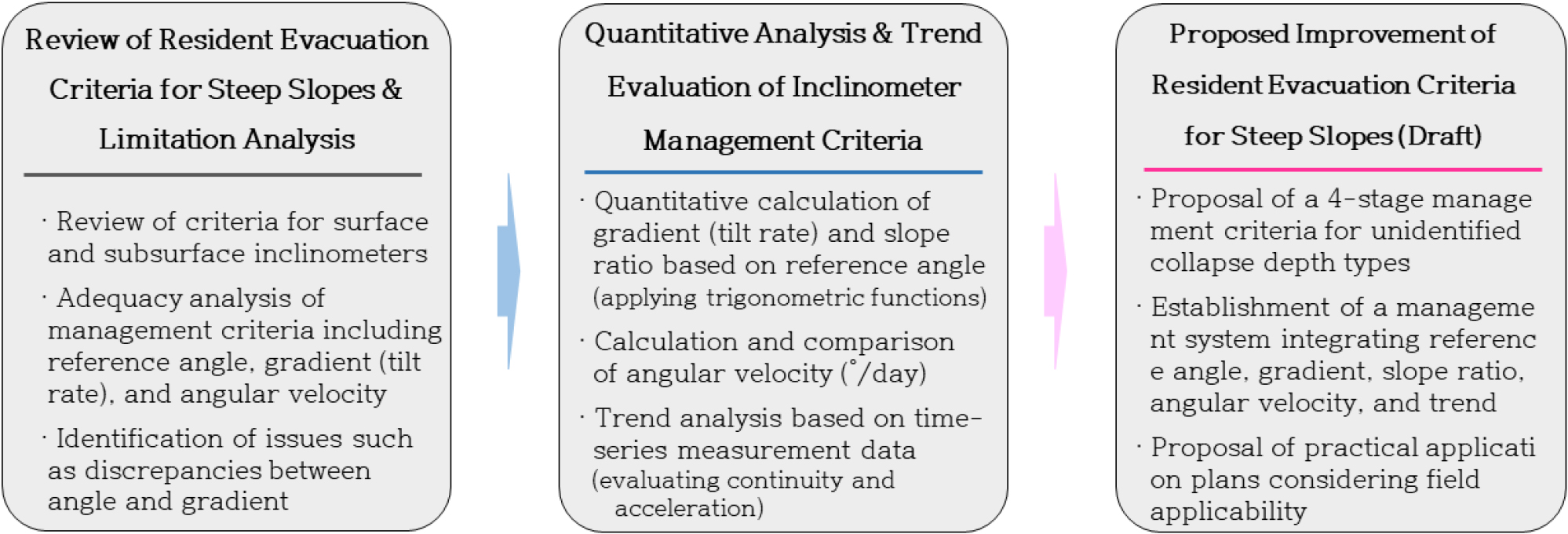
- While continuous IoT-based monitoring is expanding for steep slope hazard management, current resident evacuation criteria rely on simple threshold values, making them vulnerable to false alarms from environmental noise and exhibiting quantitative discrepancies between reference angles and gradient rates. To address these limitations, this study proposes an improved four-stage resident evacuation criteria for unidentified collapse depth types that integrates ‘current status, displacement velocity, and rate-of-change trends’. To implement this framework, a continuous monitoring system utilizing smart 3-axis exposed inclinometers—capable of automatically calculating displacement and velocity—along with an AI (RAG)-based real-time dashboard model is presented. Ultimately, this research aims to establish a comprehensive risk evaluation system based on time-series predictive trend analysis, thereby maximizing the objectivity of resident evacuation decision-making and the overall reliability of disaster response.
- COLLAPSE
경사지 재해보전을 위해 IoT 상시계측이 확충되고 있으나, 현행 주민대피 관리기준은 단순 임계값 판정에 의존하여 환경 노이즈 오경보에 취약하고 각도와 기울기율 간 정량적 오차가 존재하는 한계가 있다. 이에 본 연구는 ‘현재 상태-진행속도-변화추세’를 연계한 붕괴심도 미확인형 4단계 주민대피 관리기준을 제안하고, 이를 실현하기 위해 변위와 속도가 자동 산출되는 3축 스마트 노출경사계 기반 상시 계측 시스템 및 AI(RAG) 실시간 대시보드 구축 모델을 제시한다. 본 연구를 통해 시계열 추세분석(예측 트렌드) 기반의 종합적인 위험 평가 체계를 구축함으로써 급경사지 주민대피 판단의 객관성과 재난 대응 신뢰성을 극대화하고자 한다.
-
A Study on Improving Resident Evacuation Management Criteria for Steep Slope Collapse Hazard Areas Based on Inclinometer Measurement Data
-
Original Article

-
A Study on an Overheating Accident Detection Circuit for LED Lighting Equipment
LED 조명설비의 과열사고 감지회로에 관한 연구
-
Bon-Hyun Koo, Hyo-Jin Kang, Dong-Kurl Kwak, Jun-Ho Jeon
구본현, 강효진, 곽동걸, 전준호
- Recent weather and climate anomalies, along with increasing electricity demand, have led to the widespread adoption of LED lighting systems characterized by …
최근 기상기후의 이변과 전력수요의 증가에 따른 고효율과 높은 수명의 특성을 갖는 LED 조명설비의 보급이 확대되고 있으며, 이에 따른 설비의 안전성과 신뢰성 확보가 …
- Recent weather and climate anomalies, along with increasing electricity demand, have led to the widespread adoption of LED lighting systems characterized by high efficiency and long service life. Accordingly, ensuring the safety and reliability of these systems has become increasingly important. Therefore, this paper proposes a circuit topology for overheating detection that enables real-time detection of abnormal temperature rises in LED lighting equipment and converters, thereby helping to prevent failures and fire incidents caused by overheating. The proposed circuit consists of a PTC (Positive Temperature Coefficient) device, whose resistance increases with temperature, and a Wheatstone bridge circuit. Overheating is detected based on the bridge imbalance voltage generated by temperature variations. In addition, an Internet of Things (IoT)-based real-time monitoring system is implemented to rapidly transmit overheating information and remotely monitor the operating status of LED lighting equipment. The proposed system collects the output signal from the temperature detection circuit and transmits information on normal and overheating conditions to a remote monitoring system. This approach enables early detection of abnormal temperature rises in LED lighting equipment and provides an active safety management method to prevent equipment failures and fire incidents from escalating. The proposed system is expected to improve the safety and reliability of LED lighting equipment and contribute to efficient maintenance and fire prevention.
- COLLAPSE
최근 기상기후의 이변과 전력수요의 증가에 따른 고효율과 높은 수명의 특성을 갖는 LED 조명설비의 보급이 확대되고 있으며, 이에 따른 설비의 안전성과 신뢰성 확보가 중요해지고 있다. 따라서 본 논문에서는 LED 조명설비 및 컨버터의 비정상적인 온도 상승을 실시간으로 감지하고, 과열로 인한 고장 및 화재사고를 예방하기 위한 과열감지 회로 토폴로지를 제안한다. 제안한 회로는 온도 상승에 따라 저항값이 증가하는 PTC(Positive Temperature Coefficient) 소자와 휘스톤 브릿지회로(Wheatstone bridge circuit)로 구성되며, 온도 변화에 따라 발생하는 브릿지의 불평형 전압을 이용하여 과열 상태를 판단한다. 또한 감지된 과열 정보를 신속하게 전달하고 원격에서 LED 조명설비의 상태를 확인할 수 있도록 사물인터넷(Internet of Things, IoT) 기반의 실시간 모니터링 시스템을 구현한다. 제안한 시스템은 온도 감지회로의 출력 신호를 수집하여 LED 조명설비의 정상 및 과열 상태 정보를 원격 모니터링 환경으로 전송한다. 이를 통해 LED 조명설비의 비정상적인 온도 상승을 조기에 검출하고, 설비 고장 및 화재사고의 확대를 방지할 수 있는 능동형 안전관리 방안을 제시하고자 한다. 제안한 시스템은 LED 조명설비의 안전성과 신뢰성을 향상시키고, 효율적인 유지관리 및 화재사고 예방에 기여할 수 있을 것으로 기대된다.
-
A Study on an Overheating Accident Detection Circuit for LED Lighting Equipment
-
Original Article
-
Development of a Field-Applicable AIoT-Based Integrated Safety Management System for Improving Elevated Work Safety
고가작업 안전성 향상을 위한 현장 적용형 AIoT 통합 안전관리 체계 구축
-
Byeong Gyu Park, Dong Min Kim, Eun Seong Go, Kyeong Sik Park
박병규, 김동민, 고은성, 박경식
- Elevated work involves repeated platform ascent and descent along with close-range operations, resulting in complex risks such as overturning, falling, entrapment or …
고가작업은 작업대 승강과 근접 작업이 반복되어 전도, 추락, 끼임·충돌, 낙하물, 과부하 등 복합적 위험이 상존하나, 기존 안전관리는 육안 감시와 사후 대응에 의존해 …
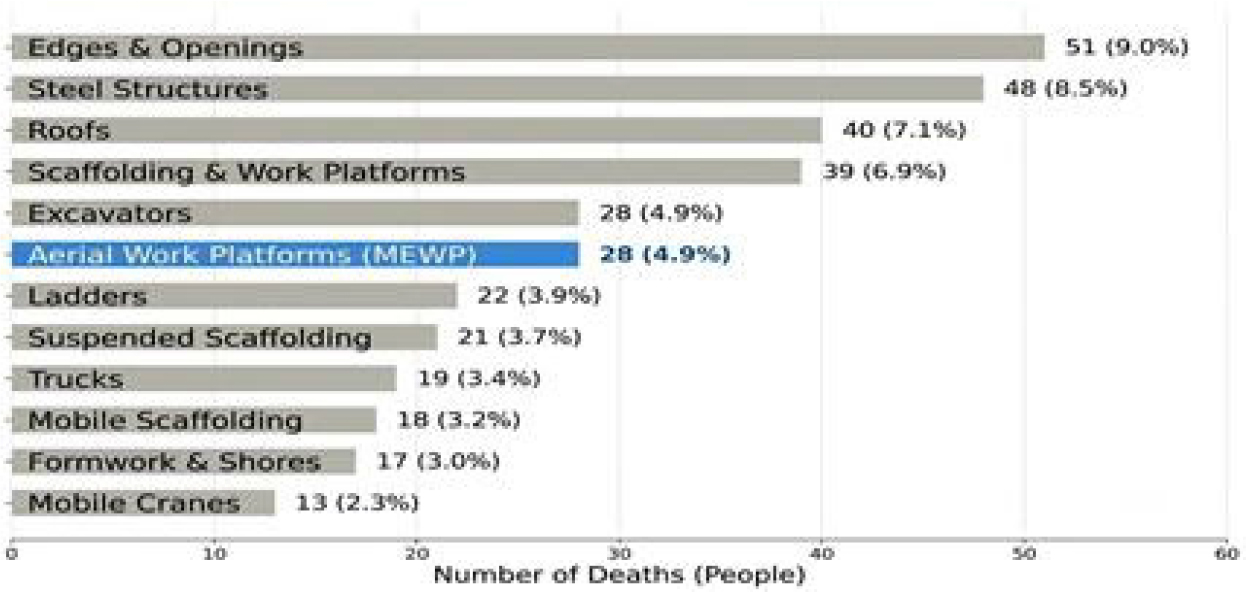
- Elevated work involves repeated platform ascent and descent along with close-range operations, resulting in complex risks such as overturning, falling, entrapment or collision, falling objects, and overloading, but existing safety management relies on visual monitoring and post-incident response, making it difficult to anticipate risk in advance. This study classifies the risk factors into these five types and proposes an AIoT (Artificial Intelligence of Things)-based integrated safety management system that detects, judges, and responds to them in real time. The system consists of three layers — sensing, edge-based judgment, and control and alert — and secures accuracy and continuity through a hybrid judgment method combining rule-based conditions with AI recognition, together with a redundant communication structure. Risk-judgment parameters were designed to be configurable rather than fixed to a specific equipment structure, and the system was built to be continuously upgraded through a VoC (Voice of Customer) system.
- COLLAPSE
고가작업은 작업대 승강과 근접 작업이 반복되어 전도, 추락, 끼임·충돌, 낙하물, 과부하 등 복합적 위험이 상존하나, 기존 안전관리는 육안 감시와 사후 대응에 의존해 위험을 사전에 예지하기 어렵다. 본 연구는 위험 요인을 이 다섯 가지 유형으로 분류하고, 실시간으로 감지·판단·대응하는 AIoT(Artificial Intelligence of Things) 기반 통합 안전관리 시스템을 제안한다. 시스템은 센싱-엣지 판단-관제 알림의 3계층으로 구성되며, 규칙과 AI 인식을 결합한 하이브리드 판단과 이중화 통신으로 정확성과 연속성을 확보하였다. 특정 장비 구조에 종속되지 않도록 위험판단 파라미터를 설정 가능하게 설계하였으며, VoC(Voice of Customer) 체계를 통해 지속적으로 고도화할 수 있는 구조를 갖추었다.
-
Development of a Field-Applicable AIoT-Based Integrated Safety Management System for Improving Elevated Work Safety
-
Original Article
-
Evaluation of the HEC-HMS Rainfall-Runoff Model for the Jicheon-gyo Basin Using AI-Assisted Hydrologic Data Processing
AI 기반 수문자료 처리를 활용한 지천교 유역 HEC-HMS 강우-유출 모형의 적용성 평가
-
Hyung-Joon Chang, Yong-Soo Cho
장형준, 조용수
- Accurate rainfall-runoff analysis requires reliable hydrologic data processing as well as appropriate model parameters that represent watershed response characteristics. This study developed …
최근 집중호우의 발생 양상이 복잡해짐에 따라 유역의 수문특성과 관측자료를 반영한 강우-유출 해석의 중요성이 커지고 있다. 본 연구에서는 지천교 유역을 대상으로 HEC-HMS 강우-유출 …
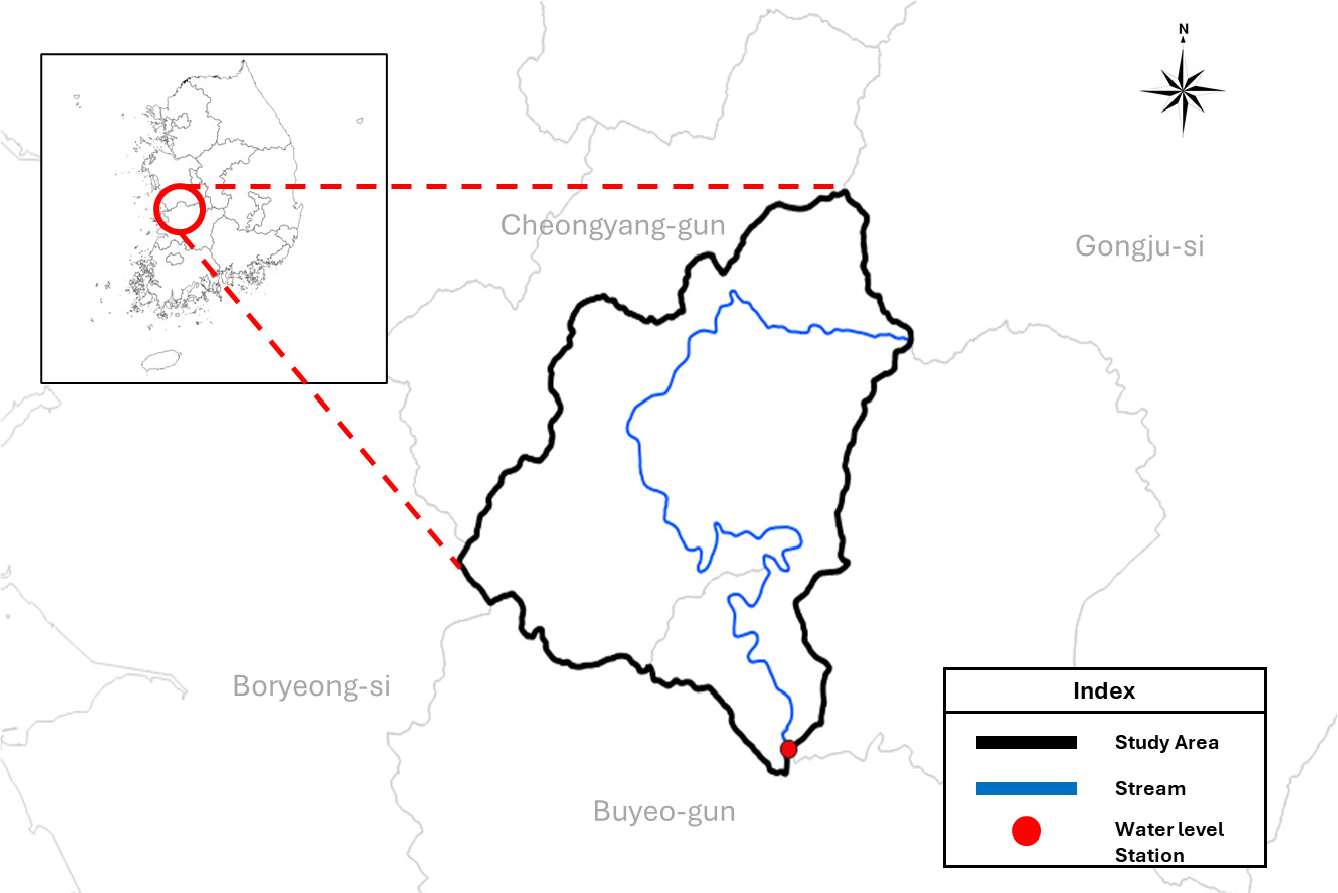
- Accurate rainfall-runoff analysis requires reliable hydrologic data processing as well as appropriate model parameters that represent watershed response characteristics. This study developed an HEC-HMS rainfall-runoff model for the Jicheon-gyo Basin and applied AI-assisted hydrologic data processing to support model input and observation data preparation. AI was used to organize rainfall and water-level time-series data, extract rainfall-runoff events based on rainfall and stage response characteristics, and construct discharge time series by applying period- and stage-specific rating equations. An SCS Curve Number of 87.8 under AMC-III conditions was applied, and the initial time of concentration (Tc) and storage coefficient (K) were estimated as 4.01 hr and 5.56 hr, respectively, using the empirical equations presented in the Korean flood estimation guideline. Nine rainfall-runoff events selected from 2014 to 2023 were analyzed, with CN fixed and only Tc and K calibrated. The NSE improved for all events after calibration, and the mean NSE increased from -0.75 to 0.72. The results indicate that AI-assisted hydrologic data processing can support the systematic preparation of long-term observational data, while the empirically estimated Tc and K can be used as initial HEC-HMS parameters but require calibration using observed data to improve runoff simulation performance.
- COLLAPSE
최근 집중호우의 발생 양상이 복잡해짐에 따라 유역의 수문특성과 관측자료를 반영한 강우-유출 해석의 중요성이 커지고 있다. 본 연구에서는 지천교 유역을 대상으로 HEC-HMS 강우-유출 모형을 구축하고, 수문자료의 처리과정에 AI 기반 자료처리기법을 활용하여 Clark 단위도법 매개변수의 적용성을 평가하였다. AI는 강수량 및 수위 시계열자료의 수집·정리, 강우와 수위 변화를 고려한 강우-유출 사상 추출, 그리고 기간별 수위-유량 관계곡선식의 적용을 통한 유량자료 구축에 활용하였다. 강우-유출 모의에는 AMC-III 조건의 SCS-CN 87.8을 적용하였으며, 홍수량 산정 표준지침의 서경대학교 경험식을 이용하여 초기 도달시간(Tc)과 저류상수(K)를 각각 4.01 hr와 5.56 hr로 산정하였다. 2014~2023년 기간 중 선정한 9개 강우-유출 사상을 대상으로 CN은 고정하고 Tc와 K를 최적화하였다. 분석 결과 모든 사상에서 NSE가 향상되었으며, 평균 NSE는 초기 모의의 -0.75에서 최적화 후 0.72로 증가하였다. 따라서 AI 기반 수문자료 처리는 장기간의 관측자료 구축 및 분석과정을 효율적으로 지원할 수 있으며, 경험식으로 산정한 Tc와 K는 HEC-HMS 모형의 초기 매개변수로 활용 가능하나 유출 재현성 향상을 위해서는 관측자료 기반의 보정이 필요한 것으로 판단된다.
-
Evaluation of the HEC-HMS Rainfall-Runoff Model for the Jicheon-gyo Basin Using AI-Assisted Hydrologic Data Processing
-
Original Article

-
A Physics-Informed Explainable AI Model for Predicting Peak Discharge and Peak Time under Moving Rainfall in Symmetric Model Basins Considering Rainfall Conditions
강우조건을 고려한 대칭 모형유역 이동강우의 첨두유량 및 첨두시간 예측을 위한 물리정보 기반 설명가능 AI 모형
-
Yong-Soo Cho
조용수
- A physics-informed explainable AI model was proposed to predict peak discharge (Qp) and time to peak (Tp) under moving-rainstorm conditions in symmetric …
대칭 모형유역에서 이동강우 조건에 따른 첨두유량(Qp)과 첨두시간(Tp)을 예측하고 주요 영향인자를 해석하기 위한 물리정보 기반 설명가능 AI 모형을 제안하였다. 유역형상, 강우 이동방향·속도 및 …
- A physics-informed explainable AI model was proposed to predict peak discharge (Qp) and time to peak (Tp) under moving-rainstorm conditions in symmetric model basins and to interpret their major influencing factors. A total of 384 numerical simulation cases combining basin shape, storm movement direction and velocity, and rainfall distribution type were analyzed using physics-informed features, including storm passage time and watershed travel time. The results showed that SVR achieved the best performance for Qp (R2 = 0.909), whereas Extra Trees performed best for Tp (R2 = 0.955). Rainfall distribution type and storm passage time were identified as major influencing factors, indicating that the relationship between the spatiotemporal characteristics of moving rainfall and watershed travel time is important for peak responses. This study provides an AI-based approach for efficiently predicting and interpreting hydrological responses to moving rainfall. External validation using observational data is required before application to real watersheds.
- COLLAPSE
대칭 모형유역에서 이동강우 조건에 따른 첨두유량(Qp)과 첨두시간(Tp)을 예측하고 주요 영향인자를 해석하기 위한 물리정보 기반 설명가능 AI 모형을 제안하였다. 유역형상, 강우 이동방향·속도 및 강우분포형을 조합한 384개 수치모의 사례에 강우 통과시간과 유역 이송시간 등의 물리정보를 반영하였다. 분석 결과, Qp는 SVR(R2 = 0.909), Tp는 Extra Trees(R2 = 0.955)가 가장 우수하였다. 또한 강우분포형과 강우 통과시간이 주요 영향인자로 나타나 이동강우의 공간·시간적 특성과 유역 이송시간의 관계가 첨두응답에 중요함을 확인하였다. 본 연구는 이동강우의 수문응답을 효율적으로 예측·해석할 수 있는 AI 기반 분석방법을 제시하였으며, 실제 유역 적용을 위해서는 관측자료를 이용한 외부검증이 필요하다.
-
A Physics-Informed Explainable AI Model for Predicting Peak Discharge and Peak Time under Moving Rainfall in Symmetric Model Basins Considering Rainfall Conditions
-
Original Article
-
Transition toward Multi-Purpose Use of Agricultural Water and Water Allocation Conflict Management: Policy Lessons from International Cases and Korea’s Institutional Context
농업용수의 다목적 활용 전환과 물배분 갈등관리: 해외 사례와 국내 제도 기반 정책 고찰
-
Sung Jin Cho, Jin A Beom, Young Joo Kim, Kwang Sik Yoon
조성진, 범진아, 김영주, 윤광식
- This study reframes the multi-purpose use of agricultural water not as a simple water transfer, but as an institutional coordination process integrating …
본 연구는 농업용수 다목적 활용을 단순한 용수 이전이 아니라 배분 기준·수리권 조정·보상 및 비용분담·이해관계자 참여·환경 및 제3자 영향·재난 대응 연계가 결합된 제도적 …
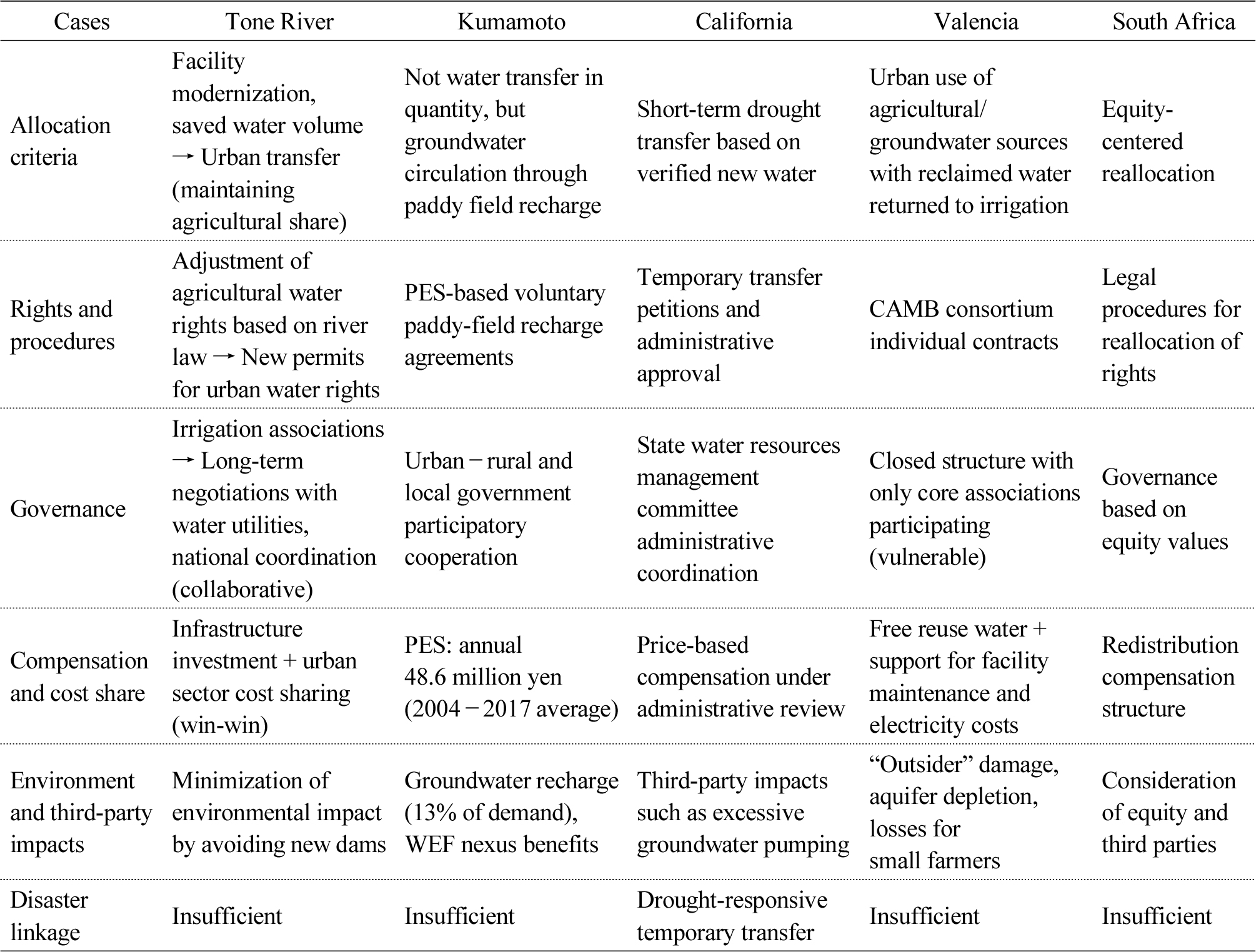
- This study reframes the multi-purpose use of agricultural water not as a simple water transfer, but as an institutional coordination process integrating allocation criteria, water-rights adjustment, compensation and cost-sharing, stakeholder participation, environmental and third-party impacts, and disaster-response linkage. Using six analytical dimensions, this study compares international cases, including California, Valencia, South Africa, and Japan’s Tone River and Kumamoto cases, with Korea’s drought responses, including Boryeong Dam, the Yeongsan-Seomjin River basins, and Gangneung Obong Reservoir. The findings show that successful reallocation depends not on adopting a single legal or market instrument, but on combining scientific verification, third-party protection, compensation, facility modernization, and regional cooperation. Accordingly, the study proposes a staged and flexible public-management-based coordination system, combining public-interest compensation based on verified savings, temporary water-rights adjustment procedures, and small-basin councils, implemented across short-, medium-, and long-term phases.
- COLLAPSE
본 연구는 농업용수 다목적 활용을 단순한 용수 이전이 아니라 배분 기준·수리권 조정·보상 및 비용분담·이해관계자 참여·환경 및 제3자 영향·재난 대응 연계가 결합된 제도적 조정 과정으로 규정하고, 캘리포니아·발렌시아·남아공·일본의 도네강·구마모토 사례를 여섯 가지 분석틀로 비교하고, 보령댐, 영산강·섬진강 유역, 강릉 오봉저수지 등 국내 가뭄 대응 사례를 통해 한국의 제도적 조건과 적용 가능성을 검토하였다. 분석 결과, 농업용수 재배분의 지속가능성은 특정 제도의 도입 여부보다 과학적 검증, 제3자 보호, 보상, 시설 현대화, 지역 협력의 결합 방식과 밀접하게 관련되는 것으로 나타났다. 이에 검증된 절감량 기반 공익보상, 한시적 수리권 조정 절차, 중소유역 협의체를 결합한 단계적·유연한 공공관리형 조정체계를 단기·중기·장기 이행 방향으로 제안한다.
-
Transition toward Multi-Purpose Use of Agricultural Water and Water Allocation Conflict Management: Policy Lessons from International Cases and Korea’s Institutional Context
-
Original Article
-
Analysis of Power Supply Strategies and Hydrogen Production Costs for Functional Continuity of a PV-Linked Water Electrolysis Hydrogen Production Plant
태양광 출력변동에 따른 수전해 기반 수소생산기지의 기능연속성 확보를 위한 전력공급방안 및 생산원가 분석
-
Ju-Hun Kim, Sung-Uk Kim, Kye-Won Jun
김주헌, 김성욱, 전계원
- This study evaluates the functional continuity and economic feasibility of a photovoltaic-linked water electrolysis hydrogen production plant. A 3.2 MW photovoltaic system …
본 연구는 태양광 출력변동에 따른 수전해 기반 수소생산기지의 기능연속성과 경제성을 평가하기 위해 3.2 MW 태양광과 2.5 MW 알칼라인 수전해 설비를 대상으로 전력공급방안별 …
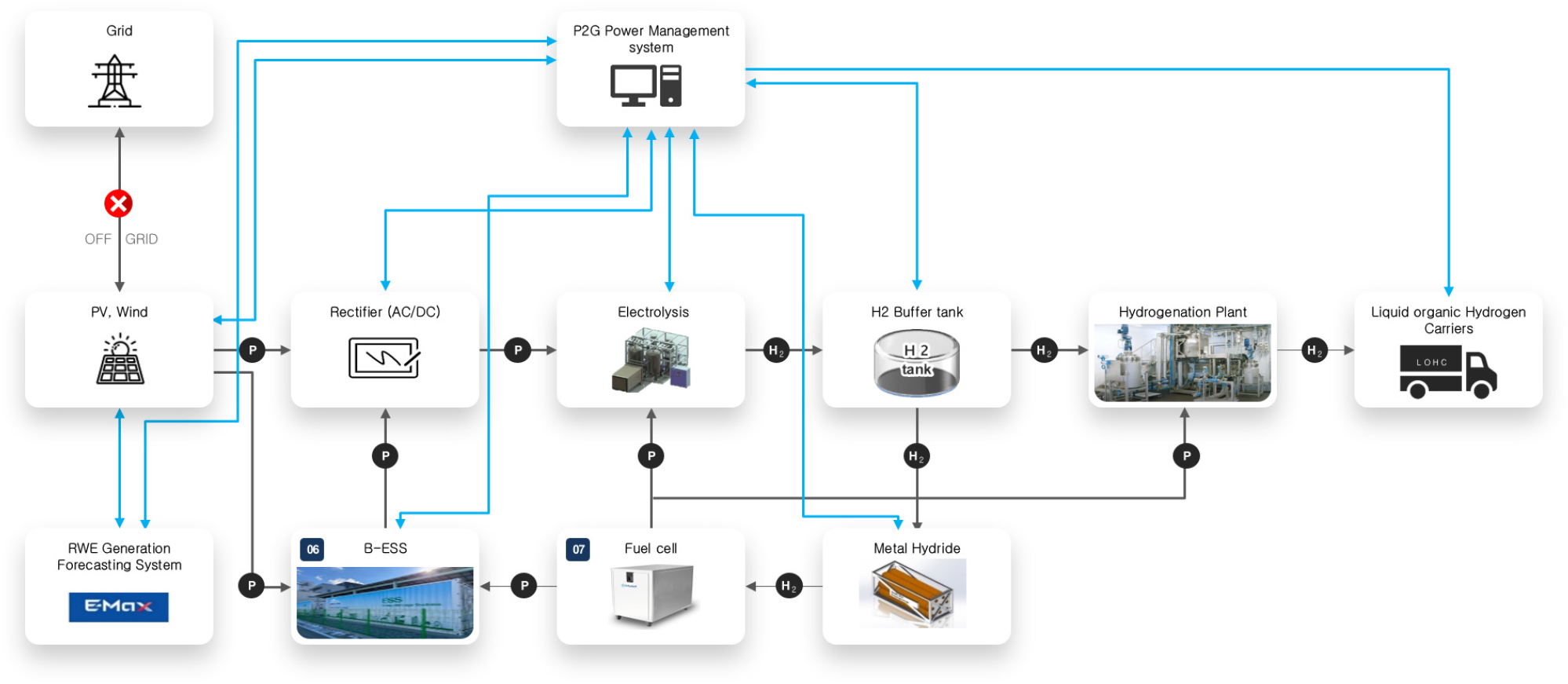
- This study evaluates the functional continuity and economic feasibility of a photovoltaic-linked water electrolysis hydrogen production plant. A 3.2 MW photovoltaic system and a 2.5 MW alkaline electrolyzer were analyzed under different power supply strategies in terms of capacity factor, hydrogen production, and production cost. The photovoltaic capacity factor was 15.1%, and output above 2.5 MW was maintained for 226 hours per year. The electricity-cost-based hydrogen production cost ranged from KRW 7,603 to 11,107 per kg-H2, while the LCOH under the reference condition was KRW 15,779 per kg-H2. The results indicate that a hybrid power supply strategy combining grid electricity and low-cost time-period electricity with photovoltaic power is more advantageous than photovoltaic-only operation for securing both functional continuity and economic feasibility.
- COLLAPSE
본 연구는 태양광 출력변동에 따른 수전해 기반 수소생산기지의 기능연속성과 경제성을 평가하기 위해 3.2 MW 태양광과 2.5 MW 알칼라인 수전해 설비를 대상으로 전력공급방안별 이용률, 수소생산량 및 생산원가를 분석하였다. 태양광 이용률은 15.1%, 2.5 MW 이상 출력시간은 연간 226시간으로 나타났다. 전력비 기준 수소생산원가는 7,603~11,107원/kg-H2, 기준조건의 LCOH는 15,779원/kg-H2로 분석되었다. 분석결과 태양광 단독운전보다 계통전력과 저가시간대 전력을 병행하는 하이브리드 전력공급이 기능연속성과 경제성 확보에 유리한 것으로 나타났다.
-
Analysis of Power Supply Strategies and Hydrogen Production Costs for Functional Continuity of a PV-Linked Water Electrolysis Hydrogen Production Plant
-
Original Article
-
Quantifying Helicopter Deployment Requirements through Wildfire Suppression Efficiency Analysis
산불 진화효율 분석을 통한 헬기 투입대수 정량화
-
Jeong Chan Yun, Nam Gyun Kim, Byong Hee Jun
윤정찬, 김남균, 전병희
- This study quantitatively compared the suppression effectiveness of helicopters, vehicles, and personnel using historical wildfire data from South Korea and proposed a …
본 연구는 국내 산불 발생자료를 이용하여 헬기, 차량 및 인력의 진화효과를 정량적으로 비교하고, 목표 피해면적과 목표 진화시간에 필요한 헬기 투입대수를 산정하는 모형을 …
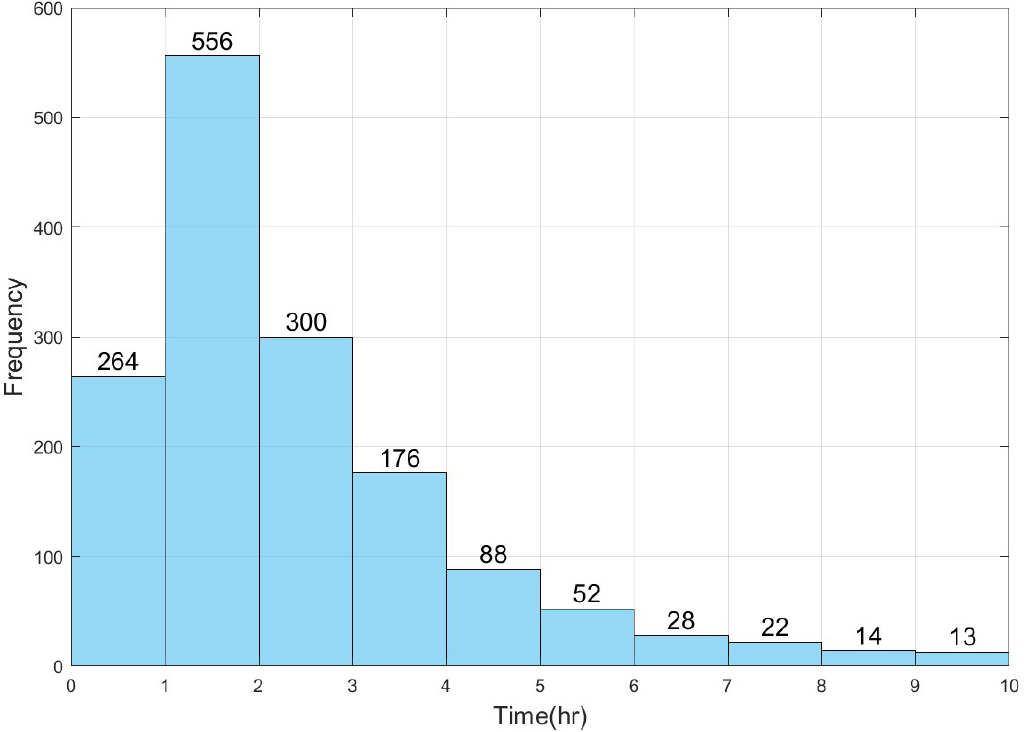
- This study quantitatively compared the suppression effectiveness of helicopters, vehicles, and personnel using historical wildfire data from South Korea and proposed a model for estimating the number of helicopters required to meet a target burned area and target suppression time. The analysis used 1,567 wildfire cases recorded from 2022 to 2024 after removing records containing missing values or errors. Suppression effectiveness was evaluated by estimating the regression slope between burned area and wildfire duration for each resource deployment level and comparing changes in the slope as resource deployment increased. The results showed that approximately 96.6% of all wildfires were suppressed within 10 hours, and 74.0% of the wildfires lasting 10 hours or less were suppressed within 3 hours, confirming the importance of initial response. For wildfires without helicopter deployment, the regression slope between burned area and duration was 2.500 h/ha. The relationship between the number of helicopters deployed and the regression slope was estimated as (a(H) = -0.2032H + 1.9490). This indicates that each additional helicopter reduced the increase in wildfire duration by an average of 0.2032 hours per hectare of burned area. Each additional vehicle produced a smaller slope reduction of 0.0423 h/ha, whereas no clear relationship was identified between the number of personnel deployed and the regression slope. Based on these results, a helicopter requirement estimation model was developed using the resource with the greatest suppression effect. The model results indicated that, when the target suppression time was set to 5 hours, five helicopters were required for a target burned area of 5 ha and eight helicopters for 10 ha. These results quantitatively demonstrate that the required number of helicopters increases as the target burned area expands under the same target suppression time. For a fixed target burned area, more helicopters were required as the target suppression time decreased. The demand for helicopters increased rapidly, particularly under conditions involving a large target burned area and a short target suppression time. This study is significant in that it compares the effectiveness of wildfire suppression resources using a common indicator derived from actual wildfire data and extends the results to the estimation of helicopter requirements. The proposed model can provide a basic decision-support tool for planning initial wildfire response and allocating limited aerial suppression resources.
- COLLAPSE
본 연구는 국내 산불 발생자료를 이용하여 헬기, 차량 및 인력의 진화효과를 정량적으로 비교하고, 목표 피해면적과 목표 진화시간에 필요한 헬기 투입대수를 산정하는 모형을 제시하는 것을 목적으로 한다. 분석에는 2022년부터 2024년까지 발생한 산불자료 중 결측값과 오류를 제거한 1,567건을 활용하였다. 진화자원의 효과는 자원 투입 규모별 피해면적–지속시간 회귀기울기를 산정한 후, 자원 증가에 따른 기울기의 변화량을 비교하는 방법으로 평가하였다. 분석 결과, 전체 산불의 약 96.6%가 10시간 이내에 진화되었으며, 10시간 이하 산불 중 74.0%는 3시간 이내에 진화되어 초기 대응의 중요성이 확인되었다. 헬기 미투입 조건에서 피해면적–지속시간 회귀기울기는 2.500 hr/ha로 나타났으며, 헬기 투입대수와 기울기의 관계는 a(H) = -0.2032H + 1.9490으로 산정되었다. 이는 헬기가 1대 증가할 때 피해면적 1 ha당 지속시간 증가량이 평균 0.2032시간 감소함을 의미한다. 차량은 1대 증가할 때 기울기가 0.0423 hr/ha 감소하는 완만한 효과를 보인 반면, 인력은 투입 규모와 기울기 사이에 뚜렷한 관계가 나타나지 않았다. 이에 따라 진화효과가 가장 크게 나타난 헬기를 대상으로 필요 투입대수 산정모형을 구축하였다. 모형 적용 결과, 목표 진화시간을 5시간으로 설정할 경우 목표 피해면적 5 ha에는 5대, 10 ha에는 8대의 헬기가 필요한 것으로 산정되었다. 이는 산불 피해면적이 확대될수록 동일한 목표시간 내 진화를 위해 요구되는 헬기 투입 규모가 증가함을 정량적으로 보여준다. 특히 피해면적이 크고 목표 진화시간이 짧은 조건에서 헬기 요구량이 빠르게 증가하였다. 본 연구는 실제 산불자료를 기반으로 진화자원의 효과를 동일한 지표로 비교하고, 이를 헬기 소요량 산정으로 확장하였다는 점에서 의의가 있다. 제안된 모형은 산불 초기 대응계획 수립과 제한된 항공자원의 확보 및 배분을 위한 기초적인 의사결정 자료로 활용될 수 있다.
-
Quantifying Helicopter Deployment Requirements through Wildfire Suppression Efficiency Analysis

Journal Informaiton
 Journal of Korean Society of Disaster and Security






 Korean Society of Disaster and Security
한국방재안전학회
Room 414, Building E8-6, 1 Chungdae-ro, Seowon-gu, Cheongju-si, Chungcheongbuk-do 28644, Republic of Korea
Tel: +82-2-720-3406 / E-mail: kosds@kosds.or.kr Copyright© Korean Society of Disaster and Security. Powered by APUB
Tel: +82-2-720-3406 / E-mail: kosds@kosds.or.kr Copyright© Korean Society of Disaster and Security. Powered by APUB